How a Restaurant Stopped Paying Delivery Commissions by Implementing Its Own Ordering System
3 min read · 5 sections
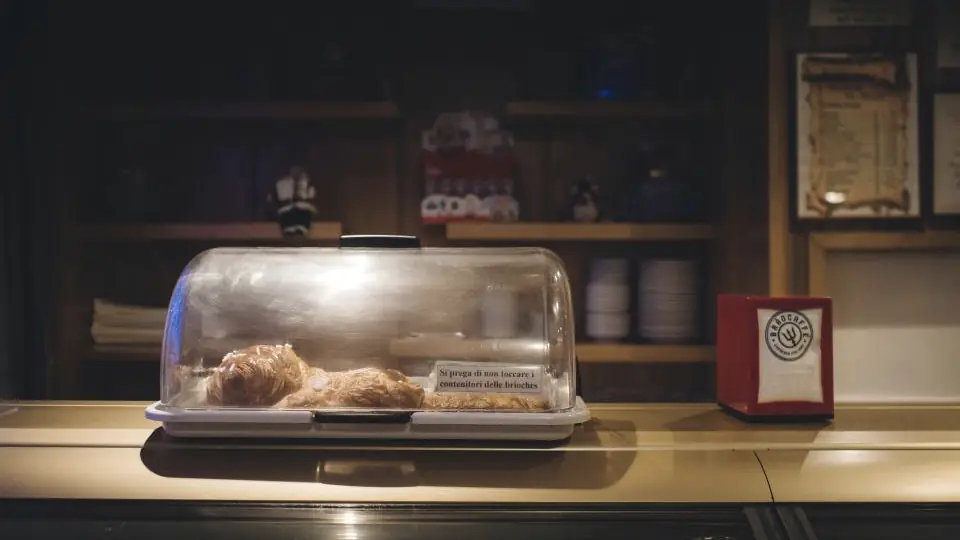
- A restaurant added its own WhatsApp ordering system without leaving the delivery apps.
- Within three months, part of its repeat orders moved to the direct, commission-free channel.
The starting point: how the business operated before
The following scenario is representative of the situation faced by restaurants with delivery operations in the US. The data reflects real sector averages. A restaurant with dine-in and delivery — twelve people on the team between kitchen, dining room, and in-house delivery — was generating a significant portion of its monthly sales through two third-party delivery apps. The team had no way to directly contact customers who ordered every week: the name, phone number, and order history stayed on the app's side, not the restaurant's. The owner knew exactly how much was going to commissions each month because he saw it in the settlement, but he had no direct channel where those same customers could order without going through the app.
Why the problem hadn't been solved before
The restaurant had been absorbing the commission for over two years without looking for an alternative, mainly for two reasons. The first was fear of the transition: the belief that if they stopped appearing as a featured option on the app, they would lose orders from customers who already had the habit of ordering there. The second was the idea that setting up a direct channel required a complex online store with technical development and maintenance the team didn't have time or knowledge to sustain. The signal that made it clear it was time to act was a month when one of the apps raised its commission without prior notice: the settlement for that month was noticeably lower than the previous one with the same order volume.
What was implemented and how
The starting point was not replacing the delivery apps, but adding a direct WhatsApp ordering channel with an online catalog — designed to capture first the customers who were already arriving through Instagram and word of mouth, and who currently had no way to order directly. The team loaded the menu once into the catalog, with photos and prices, and that same catalog became available as a shareable link on social media and in the restaurant. The setup required no technical knowledge: someone from the front of house could update prices and items without depending on a developer. From start to seeing the first orders come in through the direct channel took two to three weeks, with most of the time spent spreading the word about the new channel among regular customers, not on system configuration.
The concrete results
In the first few weeks, recurring customer orders started splitting between the direct channel and the delivery apps. The team stopped writing down phone orders by hand to enter into the app: the online catalog organized them directly in the same format already used in the kitchen, with fewer transcription errors.
Between the second and third months, roughly a quarter of the orders that had previously come exclusively through third-party apps started arriving through the direct channel. On that migrated portion, the restaurant stopped paying the per-order commission, which translated into recovered margin month after month without reducing total delivery sales volume.
What the team didn't expect was that many of the customers who migrated to the direct channel never ordered through the delivery apps again: once they had a direct, simpler channel, they stopped using the intermediary by their own choice — not because the restaurant asked them to.
What the business learned along the way
Companies that go through this process frequently discover that the biggest obstacle wasn't technical but conceptual: they feared having to choose between the marketplace and the direct channel, when in reality they could operate both simultaneously. Another common finding is that most customers who migrate don't do so because of a discount or promotion, but simply because ordering through WhatsApp from someone they already know feels more direct than opening an app shared with dozens of restaurants.
Is your business in a similar situation?
This process is relevant for restaurants with active delivery on at least one third-party platform, with enough recurring order volume to notice the commission in the monthly settlement, and with regular customers who currently have no way to order directly. If you recognize your business in this situation, at Zefell we can evaluate how a direct ordering channel would apply to your specific case.
Want to see how Zeftienda handles this?
Zeftienda connects your catalog, your online store and your orders in one place. We’ll show it to you running in a free demo.
Related articles
 Case study
What delivery apps really charge you: the calculation nobody does for you
DoorDash and Uber Eats commissions for restaurants: why the plan rate is not what you end up paying, and how to calculate the real cost for your business.
 Comparison
Third-party delivery apps vs own ordering system: the real commission count
How much do DoorDash and Uber Eats really charge vs building your own restaurant delivery system: real commissions, margins, and when each option makes sense.
 Article
Online ordering system for restaurants: how it works and what you need to implement it
How an online ordering system for restaurants works, what you need to implement it, and why it makes sense to add it without replacing your delivery apps.
 Article
Delivery system for restaurants: how it works without depending on third-party apps
What a delivery system for restaurants is, what types exist, and how your own channel works without paying a commission on every order to DoorDash or UberEats.
Frequently asked questions
The questions that come up before taking the next step.
No. The direct channel runs in parallel with delivery apps, not as a replacement. The idea is to capture first the orders from customers who already find you through Instagram or word of mouth and currently have no way to order directly, while third-party platforms keep operating exactly as before.
Setting up the catalog and WhatsApp ordering channel requires no technical knowledge and can be done in a few days. What usually takes more time is spreading the word about the new channel among regular customers — not the implementation itself.
It's known as an ordering system, ticket system, or restaurant order software, depending on whether the focus is on table orders, kitchen flow, or delivery. When the order is taken directly from the customer without intermediaries, it's also called a direct ordering channel.

30 minutes. No commitment.
Schedule your free diagnostic.
We'll pinpoint exactly where your business is losing time, capacity, and operating margin, even if we never work together.
Schedule a free diagnostic